Wyoming WIC

2½ TO 3 YEARS

2½-TO-3-YEARS-EN-QR

I am a toddler.

I learn when WE EAT TOGETHER.

Family meals help me grow in many ways. I learn language skills, social skills, and I eat better when we eat together. Let’s eat family meals together as often as possible.

toddler

HERE ARE SOME WAYS TO MAKE FAMILY MEALS RELAXING AND ENJOYABLE:

Teach me how to behave at the table.

HOW MUCH SHOULD I EAT?​

During my second year of life, less of my nutrition will come from breast milk or formula and more will come from table foods. I continue to learn about new foods. I’m trying new tastes and textures. My foods will change as I learn and grow.

For me, amounts are still small. I may be eating more whole foods that are soft, cut up, or foods I can pick up by myself.

My appetite can change from day to day. Don’t worry if I eat more one day and less the next. Keep offering me new foods and add on to favorites I enjoy. We’ll learn together. Eating together should be enjoyable for both of us.

Offer meals and snacks about every 2-3 hours, including something before bedtime.

Create a satisfying meal or snack by offering me a few different foods at snack time.

I eat small portions. A serving is 2-3 tablespoons or a quarter slice of bread. Let me eat until I show you I am full.

Here are some examples of what meal and snacks might look like on my plate.

Many of these options can be made with WIC-approved foods!

Breakfast

chopped peaches
mini pancakes with maple syrup
100% fruit juice
yogurt
- OR -
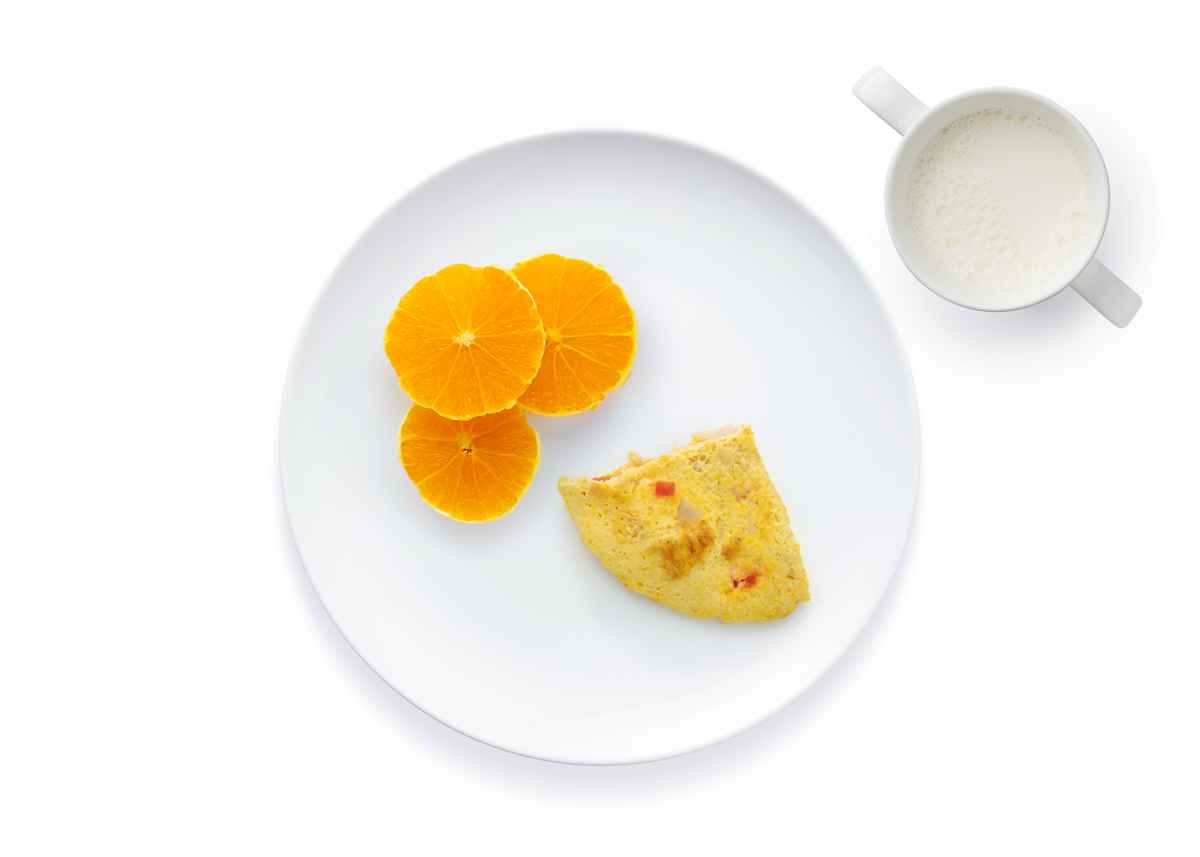
orange slices
Breakfast_oranges-omelet
milk in an open cup
ham, cheese, and red pepper omelet

Lunch

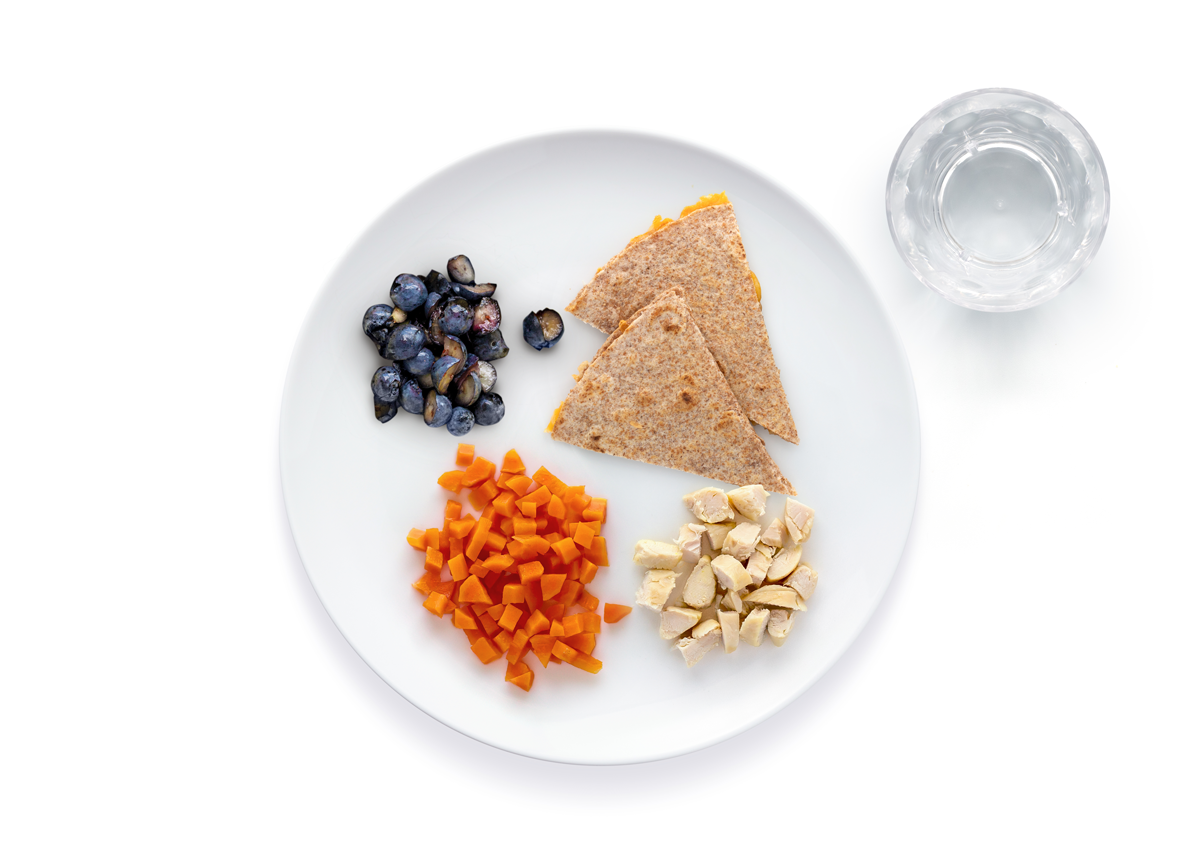
blueberries
cooked, chopped carrots
Lunch_quesadilla_carrots_blueberries-chicken
water in an open cup
cheese quesadilla
baked, chopped chicken
- OR -
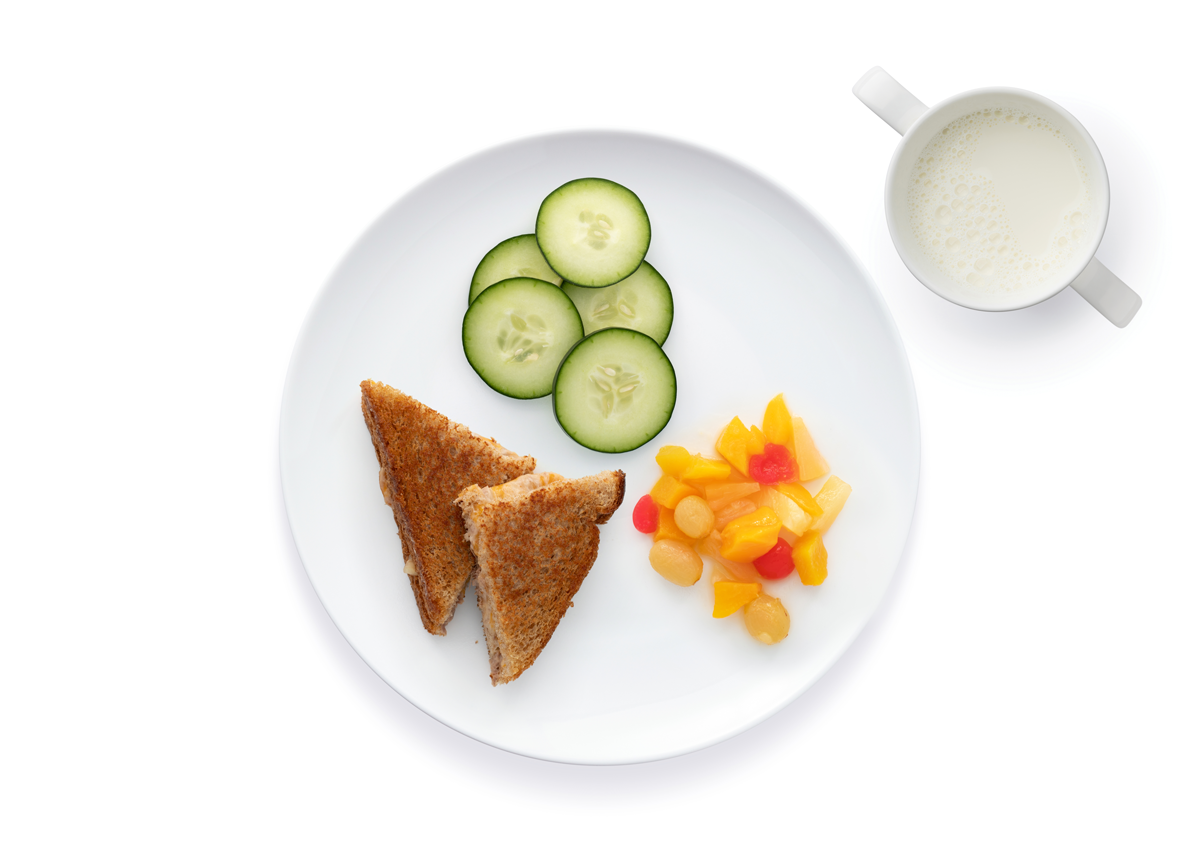
sliced cucumber
grilled cheese and tuna fish sandwich 
Lunch_tuna-cheese_cucumber_fruit
milk in an open cup
mixed fruit

Snacks

cold breakfast cereal with milk

Snack_strawberry-cereal
water in an open cup
sliced strawberries
- OR -
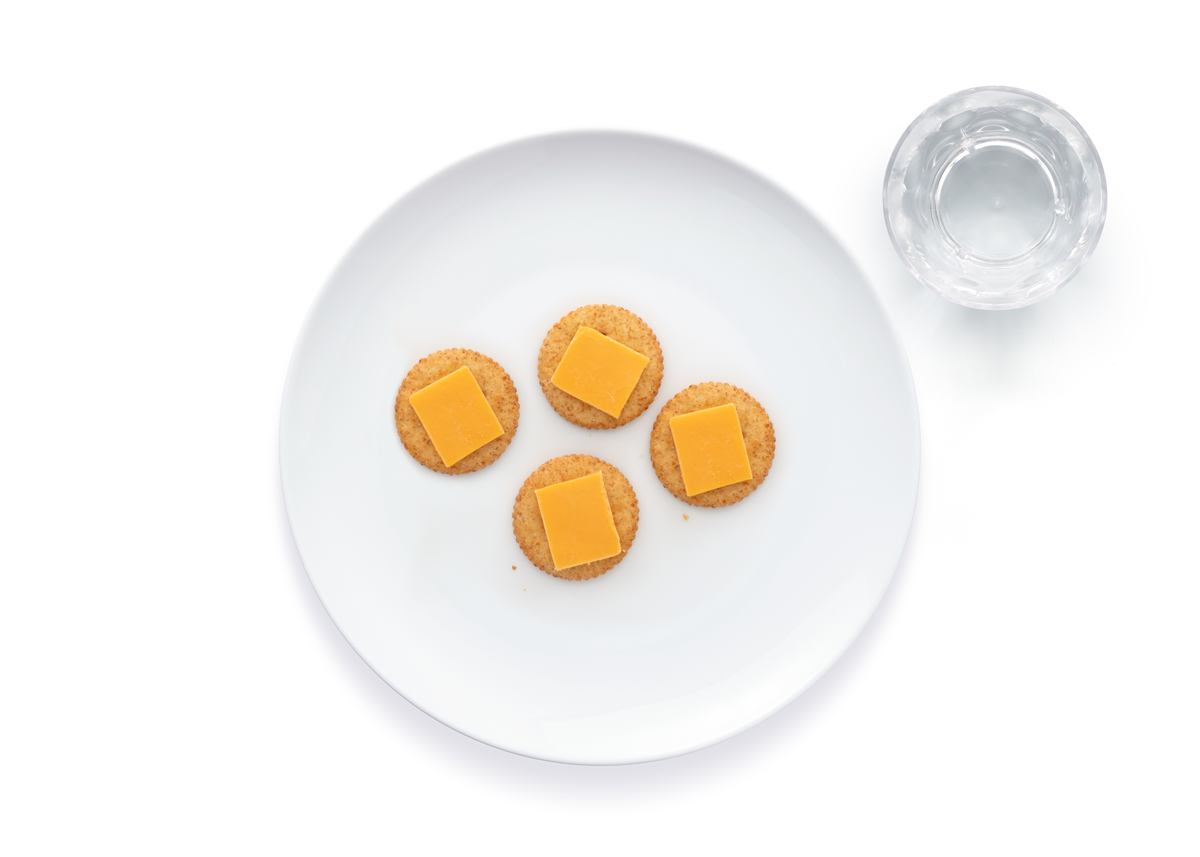
crackers with cheese
Snacks_cheese-crackers
water in an open cup
- OR -
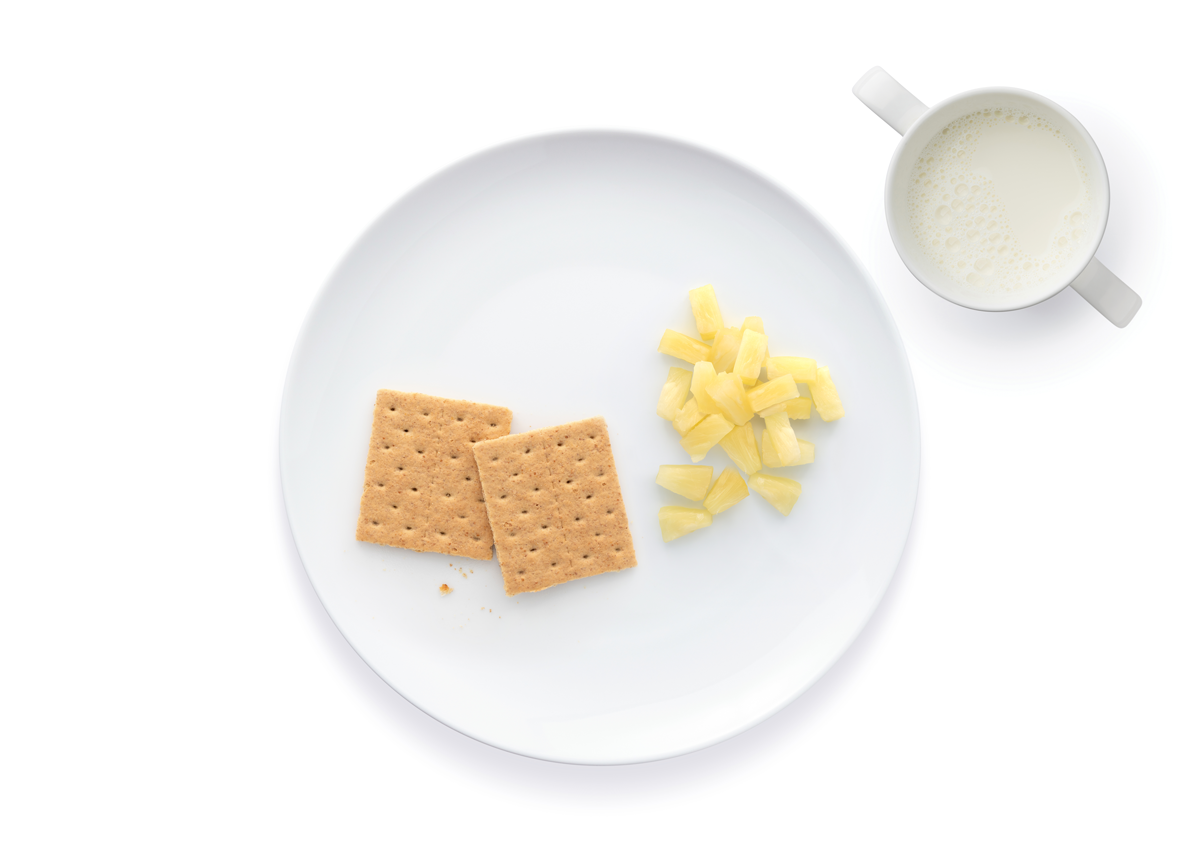
graham crackers
milk in an open cup
pineapple tidbits
- OR -
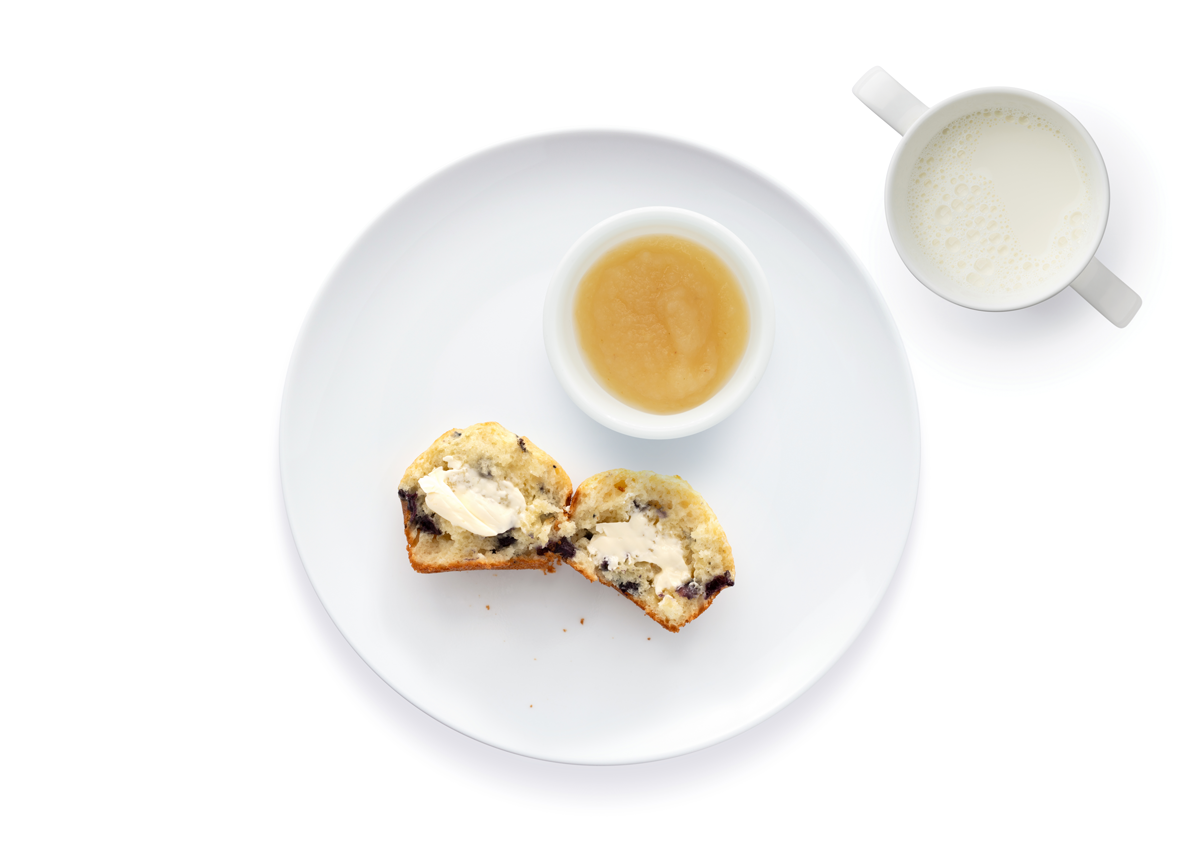
applesauce
blueberry muffin with butter
Snacks_blueberry-muffin-wButter_applesauce
milk in an open cup

Offer snacks between meals. They help tide me over between meals. Plan for two during the day and one before bed.

Dinner

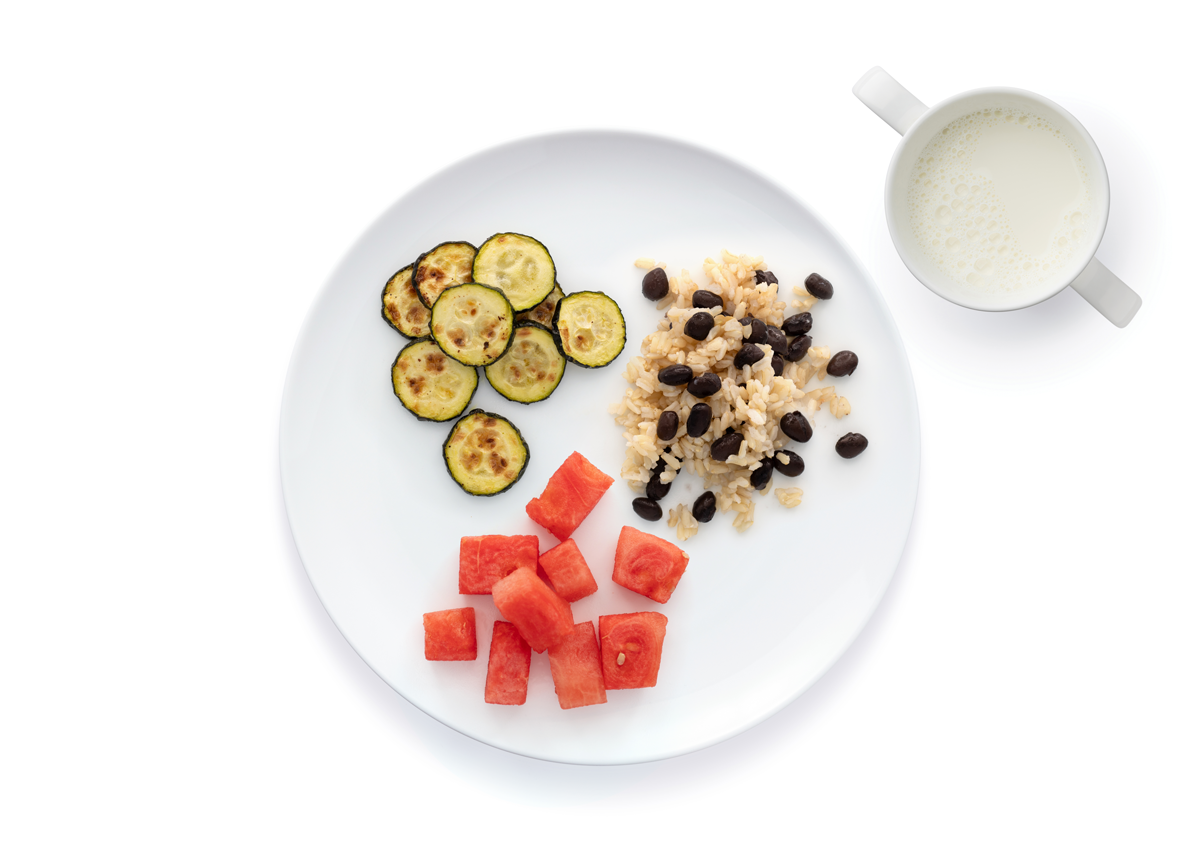
cooked, zucchini slices
cut up melon
Dinner_beans-rice_watermelon_zucchini
milk in an open cup
brown rice with black beans
- OR -
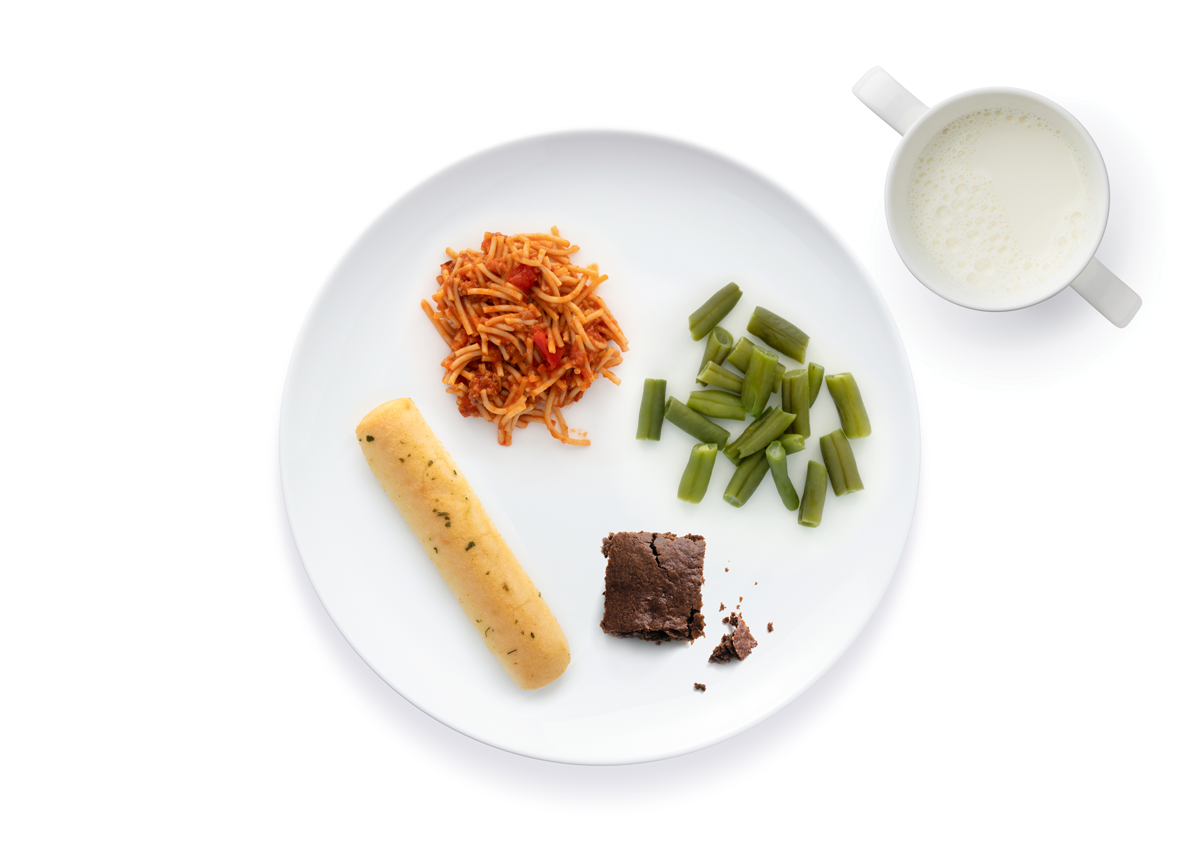
cut up spaghetti with tomato and meat sauce and mozzarella cheese
mini breadstick 
milk in an open cup
green beans
brownie  
 

A serving at my age is about 2-3 tablespoons of a food. Offer 2-3 food items at a meal and build from there. Let me eat until I show signs I’m full. I might close my lips, turn or shake my head, or raise my arm. Let me stop eating and get down when I’m done.

My eating might vary from day-to-day. Don’t worry, that’s normal for me.

Food Groups

These are examples of foods that are in each food group. I may eat more or less than the amount of each food shown.

Family Meals

Let's Stay on Schedule

Look what I can do!

I want to help

I want to please you. Here are ways I can help. Please say you are proud of me.

Let's Play

Keep me safe and healthy

Help me take care of my teeth. Please brush my teeth, front and back, 2 times a day. Use a small toothbrush with soft bristles and a rice-sized amount of fluoride toothpaste. Start to floss my teeth for me. Take me to the dentist to keep my teeth strong.

We need to wash our hands often. Teach me how to wash my hands with warm water and soap. I need to wash them for at least 20 seconds.

Sharing food from your utensils spreads germs that can give me cavities; I learn by using my own utensils.

I’m still learning to use a cup to drink with. Give me water when I ask for a drink.

At my checkup with the doctor, ask if I need a lead test.

Watch me in the tub or near water.

Keep cords up so I can’t pull on them.

Lock up cleaners, sprays, and medicines.

Buckle me into a child safety seat.

Keep me away from smoke, matches, lighters, and vaping tools. I can be poisoned by swallowing, breathing, or absorbing e-cigarette liquid through my skin or eyes.

If you own a gun, please keep it locked in a safe place.

Keep my screen time to an hour a day.

Install this web app on your iPhone: tap and then Add to Home Screen.

CROSS-CRADLE HOLD

Cross-Cradle Hold

  1. For the right breast, use your left arm to hold your baby’s head at your right breast and baby’s body toward your left side. A pillow across your lap can help support your left arm.
  2. Gently place your left hand behind your baby’s ears and neck, with your thumb and index finger behind each ear and your palm between baby’s shoulder blades. Turn your baby’s body toward yours so your tummies are touching.
  3. Hold your breast as if you are squeezing a sandwich. To protect your back, avoid leaning down to your baby. Instead, bring your baby to you.
  4. As your baby’s mouth opens, push gently with your left palm on baby’s head to help them latch on. Make sure you keep your fingers out of the way.
  5. Reverse for the left breast.

This hold is useful when:

CLUTCH OR “FOOTBALL” HOLD

Clutch or “Football” Hold

  1. For the right breast, hold your baby level, facing up, at your right side.
  2. Put your baby’s head near your right nipple and support their back and legs under your right arm.
  3. Hold the base of your baby’s head with your right palm. A pillow underneath your right arm can help support your baby’s weight.
  4. To protect your back, avoid leaning down to your baby. Bring baby to you instead.
  5. Reverse for the left breast.

This hold is useful when:

CRADLE HOLD

Cradle Hold

  1. For the right breast, cradle your baby with your right arm. Your baby will be on their left side across your lap, facing you at nipple level.
  2. Your baby’s head will rest on your right forearm with your baby’s back along your inner arm and palm.
  3. Turn your baby’s tummy toward your tummy. Your left hand is free to support your breast, if needed. Pillows can help support your arm and elbow.
  4. To protect your back, avoid leaning down to your baby. Instead, bring your baby to you.
  5. Reverse for the left breast.

This hold is useful when:

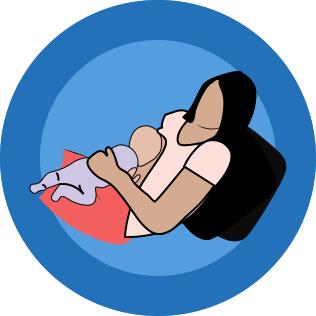
Laid-Back Hold

Laid-Back Hold

  1. Lean back on a pillow with your baby’s tummy touching yours and their head at breast level. Some moms find that sitting up nearly straight works well. Others prefer to lean back and lie almost flat.
  2. You can place your baby’s cheek near your breast, or you may want to use one hand to hold your breast near your baby. It’s up to you and what you think feels best.
  3. Your baby will naturally find your nipple, latch, and begin to suckle.

This hold is useful when: