Wyoming WIC
Paced Bottle Feeding for Breastfed Babies

Paced Bottle-Feeding: How to Feed Your Baby the Right Way

/paced-bottle-feeding-how-to-feed-your-baby-the-right-wa
June 10, 2026 Women

paced bottle babies Paced Bottle-Feeding for Breastfed Babies

If you’re giving your baby a bottle, how you feed matters just as much as what you feed. One helpful method is called paced bottle-feeding.

This simple technique helps your baby:

Let’s take a closer look at how it works.

question icon What Is Paced Bottle-Feeding?

Paced bottle-feeding is a way of feeding your baby that mimics how breastfeeding works.

When babies breastfeed, they control the flow of milk. Milk only flows when they are actively sucking, and it pauses when they stop to breathe. With paced bottle-feeding, we try to create that same experience.

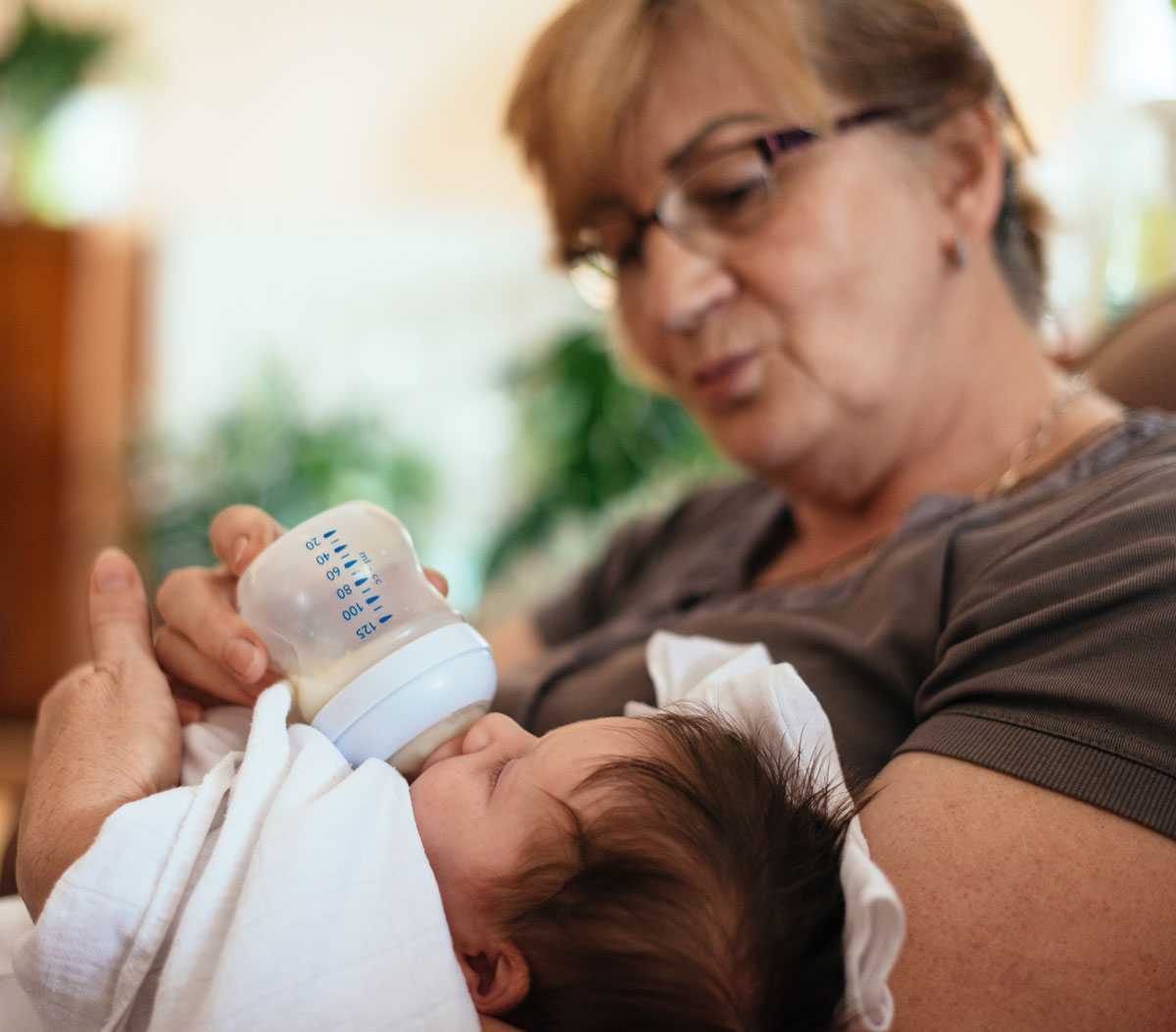
Grandmother feeding a baby with a bottle.

bottle safe Why Position Matters

In traditional bottle-feeding, babies are often held in a cradle position with the bottle tipped straight up and down. In this position, gravity causes milk to flow quickly into your baby’s mouth – even when they aren’t sucking.

This can:

Paced bottle-feeding slows things down and puts your baby in control.

notebook facts How to Do Paced Bottle-Feeding

Follow these simple steps for paced bottle-feeding:

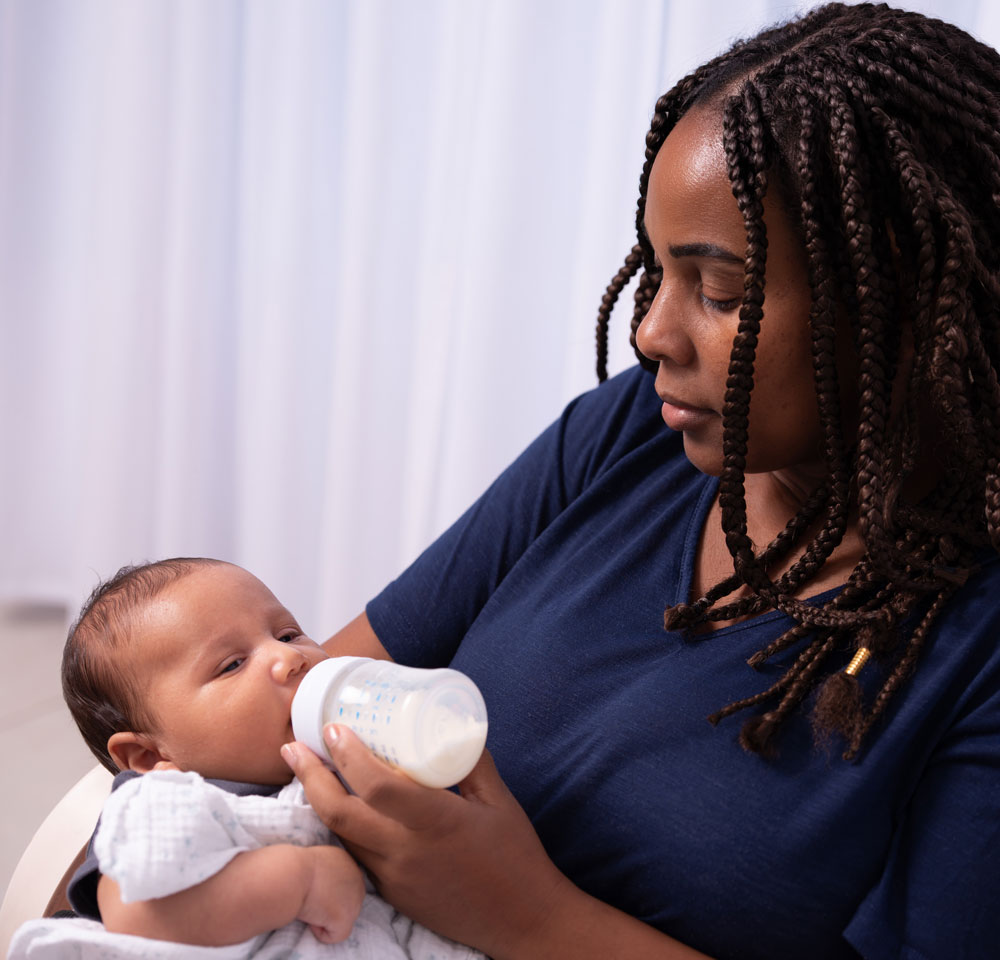
Mother bottle feeding infant baby
1.
HOLD YOUR BABY IN AN UPRIGHT POSITION

Keep your baby more upright, rather than lying flat. This helps them stay in control and makes swallowing easier.

Bottle feeding tracking records labeled
2.
HOLD THE BOTTLE HORIZONTALLY

Instead of tipping the bottle straight up, hold it flat (horizontal). This slows the flow of milk.

Mother feeding toddler with bottle
3.
FILL THE NIPPLE HALFWAY WITH MILK

Tilt the bottle just enough so that about half of the nipple is filled. This helps reduce fast flow from gravity and can also limit how much air your baby swallows.

Baby drinking from feeding bottle
4.
LET YOUR BABY LEAD

Watch your baby’s cues. Milk should only flow when your baby is actively sucking. When they pause, the flow should slow or stop.

Baby feed bottle Benefits of Paced Bottle-Feeding

Using this method of bottle feeding can help:

hand Feeding Positions to Try

There are two common positions that work well with paced bottle-feeding: an upright sitting position and a side-lying position.

Try both positions to see what feels most comfortable for you and your baby.

A blue abstract shape overlaid with pink and yellow highlights.

Upright Sitting Position

STEP #1

Sit your baby upright in your lap

STEP #2

Support their head and neck

STEP #3

Hold the bottle horizontally

Orange abstract shapes with swirling patterns on white background.

Side-lying Position

STEP #1

Lay your baby on their side in your lap or on a pillow

STEP #2

Hold the bottle horizontally

Tip!

This position is similar the breastfeeding cross-cradle hold.

healthy people You’ve Got This

Feeding your baby is a special time to connect. Small changes, like pacing the bottle, can make a big difference in your baby’s comfort and feeding success.

If you have questions or need support, your local WIC office is here to help. Peer counselors and staff can guide you and answer your questions along the way.

REFERENCES:

Install this web app on your iPhone: tap and then Add to Home Screen.

CROSS-CRADLE HOLD

Cross-Cradle Hold

  1. For the right breast, use your left arm to hold your baby’s head at your right breast and baby’s body toward your left side. A pillow across your lap can help support your left arm.
  2. Gently place your left hand behind your baby’s ears and neck, with your thumb and index finger behind each ear and your palm between baby’s shoulder blades. Turn your baby’s body toward yours so your tummies are touching.
  3. Hold your breast as if you are squeezing a sandwich. To protect your back, avoid leaning down to your baby. Instead, bring your baby to you.
  4. As your baby’s mouth opens, push gently with your left palm on baby’s head to help them latch on. Make sure you keep your fingers out of the way.
  5. Reverse for the left breast.

This hold is useful when:

CLUTCH OR “FOOTBALL” HOLD

Clutch or “Football” Hold

  1. For the right breast, hold your baby level, facing up, at your right side.
  2. Put your baby’s head near your right nipple and support their back and legs under your right arm.
  3. Hold the base of your baby’s head with your right palm. A pillow underneath your right arm can help support your baby’s weight.
  4. To protect your back, avoid leaning down to your baby. Bring baby to you instead.
  5. Reverse for the left breast.

This hold is useful when:

CRADLE HOLD

Cradle Hold

  1. For the right breast, cradle your baby with your right arm. Your baby will be on their left side across your lap, facing you at nipple level.
  2. Your baby’s head will rest on your right forearm with your baby’s back along your inner arm and palm.
  3. Turn your baby’s tummy toward your tummy. Your left hand is free to support your breast, if needed. Pillows can help support your arm and elbow.
  4. To protect your back, avoid leaning down to your baby. Instead, bring your baby to you.
  5. Reverse for the left breast.

This hold is useful when:

Laid-Back Hold

Laid-Back Hold

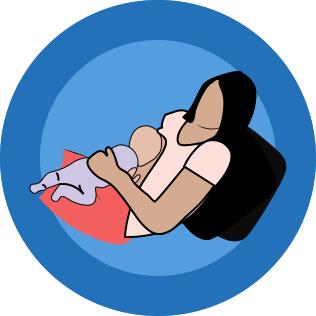
  1. Lean back on a pillow with your baby’s tummy touching yours and their head at breast level. Some moms find that sitting up nearly straight works well. Others prefer to lean back and lie almost flat.
  2. You can place your baby’s cheek near your breast, or you may want to use one hand to hold your breast near your baby. It’s up to you and what you think feels best.
  3. Your baby will naturally find your nipple, latch, and begin to suckle.

This hold is useful when: